Lately, I’ve been trying to avoid locking in on any single video game by setting arbitrary limits and playing a couple games a day instead of just one. Five sets of Tekken is enough for one day, right? Or two games of basketball. Few rounds of Apex. Then I can pivot to Katamari, or Demon Castle Story, the Final Fantasy 7 Rebirth demo, or something I’ve been neglecting for a while. Will it work? Well, I played three rounds of Marathon earlier and turned it off. So…maybe becoming a control freak will fix me. This is the ninth i david brothers’s newsletters, and it’s about fundraising for At the Crossroads, comics criticism, and martial arts:
—
four things of no particular relation:
–Sagrada Familia department: A couple letters ago I talked about Antoni Gaudí and public art. Here in Oakland, we don’t have a Sagrada Familia, but we do have giraffes. Dan Fontes, a local muralist, painted a bunch of giraffes on underpasses near my first apartment in Oakland. I liked seeing them while waiting for the bus or walking downtown. The murals are older than I am. They were here waiting for me when I got to Oakland. Fontes passed away recently. It sounds like he was a boon to the Town.
–NBA update: the New York Knicks must be destroyed and the Atlanta Hawks must be avenged. If the San Antonio Spurs won’t do it, I’ll lace up my high tops. Don’t play with me, New York.
–We Take Those division: There’s a point in every Monster Hunter game I’ve played when the series theme, “Proof of a Hero,” begins playing (youtube playlist). It’s the moment in anime when the theme song of the series or a certain character begins playing in a climactic moment. It’s one weird trick that always works.
–Vince Staples has a new album: Vince Staples has a new album! Here he is performing it live on youtube.
—
please help us help other people:
Branwyn Bigglestone and I are doing some fundraising for At The Crossroads, an org that supports homeless youth in San Francisco. I started volunteering with them in 2014 thanks to Branwyn, and taking part in their June fundraiser is a pleasure. I talked about it in the last newsletter, too.
I’d like to raise some money for this cause. I’d like to use the attention I get to make things better for people. We have a modest goal of $2,000 to start with, but if we clear twenty-five grand by accident, you won’t find me walking around upset.
ATC has a little chart showing how far money can go to help someone if you’re curious. The actual event part of things has shifted since I last wrote, but every little bit still helps in this situation. Small dollars can buy food and shelter just like big dollars, if we all work together.
—
comics criticism will never die:
I really enjoyed listening to David Harper and Tiffany Babb discuss her kickstarter for The Comics Staple and comics criticism more generally. Both these two have been strong voices for criticism over the past while, and there’s a good dynamic in their conversation. I was slightly ambushed by them saying some very nice things about me. I’m never really sure how other people see me, so that’s neat.
I really appreciate comics criticism, and arts criticism more generally. One-on-one conversations are great, whether they’re in-person or over some app, but it’s nice to live in someone else’s head for a couple thousand words and see how their strong take lands with you. Receiving instead of transmitting, I think. I thought I had a strong and sympathetic grasp of Neon Genesis Evangelion, but this essay by the late Zac Bertschy forever shifted how I talk about that series and the things that happen in it. He blew the doors off, and that doesn’t necessarily happen the same way in a conversation.
Criticism enjoys a longevity that our daily conversations about comics don’t really have, too. Websites go away all the time, of course, but I reach back to see what The Comics Journal had to say about some old faves, or some sites that’ve kept an archive live for years. I have a couple old issues of Amazing Heroes, mostly because they covered my beloved manga localization pioneers Studio Proteus.
A canon is not something that really matters to me, outside of usually quickly discarded thought experiments, but I do like having multiple opinions, and especially years of opinions, to check my own against.
My ideal is having a series of conversations that occasionally lead to longer, more considered pieces (text, video) I can read at my leisure. If I hit that billion dollar Powerball from a while back, I would’ve opened a criticism salon/martial arts temple way up a mountain somewheres.
—
there’s a couple excerpts in this bit that are really fun:
Case in point: in July 1983, months before I was born, the late Kim Thompson reviewed Frank Miller’s Ronin #1 for The Comics Journal.
I really enjoyed reading this, even though I’m definitely more into Miller’s work than Thompson was at the time. I think that’s partly due to the gap between what comics were expected to be like then and how they are expected to be now, and especially Thompson’s self-admitted ignorance of Japanese comics. The manga revolution hit this review like a truck, spreading both Japanese culture and new storytelling tropes.
To be clear, I don’t mean “I really enjoyed reading this” in a sarcastic way, nor am I going at Thompson. It’s more like…here’s a perspective that is well-argued and interesting but a victim of history, in a way, and seeing the difference in perspectives held then versus now really gets my brain going. This bit in particular had me hooting:
Miller set himself a formidable task by placing the story in Medieval Japan, a culture that, despite Kurosawa revivals and Shogun, remains profoundly alien to the Western spirit. This is not an insurmountable problem, but Miller doesn’t even come within a stone’s throw of solving it. He writes the young samurai as a dour, ethically-obsessed, somewhat dim fellow, and then seeks to ease the cliché by giving his aged mentor a more earthy, with-it appeal. I don’t know if playing the samurai within the classic clichés and then mocking him through his master is such a sharp idea: we’re immediately alienated from the ronin, whom we regard as something of a humorless clod.
‘cuz…man. Man!!! Goofy mentors are a dime a dozen in manga, even in serious work, and po-faced samurai stories aren’t half as fun as the ones that poke and prod at the marketing of samurai over the years. But how could Thompson know how things would change?
I’ve said before that I get the most out of reading reviews I don’t exactly agree with, that chasing opposing viewpoints on art helps me figure out my own position. This essay is a great example of what I mean. There are multiple points that make me go “nah, nahhhh,” especially in terms of Thompson’s view on various aspects of Japanese culture, but there are also points that make me sit back and really dig into how I feel and what Thompson is saying. The essay makes me want to take it seriously. For instance:
The artwork is thoughtfully designed and meticulously executed, and virtually none of it is any good. Miller still draws the human body very badly; his characters never balance or move correctly. Now, in a book that is mostly composed of fight scenes, it would seem quite a liability to have an artist who doesn’t draw action well. In a sense, though, Miller doesn’t draw action at all. I had begun to notice this in Daredevil, and it, is even truer of Ronin: Miller’s panels, individually, are usually immobile. They display people posing before and after the action; every movement happens between the panels. Significantly, the few panels where the characters actually do move are among the worst constructed and least convincing.
The first sentence is a banger. Full send, knives out, blood on the dance floor, cancel Christmas. I initially balked at the idea that Miller draws humans badly, then was surprised at the idea that he didn’t draw action, then got a clue when he mentions that every panel is before and after the action. This is probably another manga thing, more Lone Wolf & Cub influence, but it’s a point-of-view that’s never occurred to me. My interest in Miller is frequently about sturdy bodies and people in motion and damned heroes. Thompson isn’t wrong, though I disagree that the drawings has the effect he describes.
I was really glad a friend recommended this review after we talked for a while about Ronin. This is the stuff that makes me sharper.
—
paper is not necessarily neutral:
In a very similarly focused but much kinder lane to the late Kim Thompson’s barnburner of a review of Ronin, I really enjoyed Alex Hoffman discussing Mama Came Callin’ by Ezra Claytan Daniels & Camilla Sucre in the sequential.li newsletter. An initially overwhelming part of my day job was learning a lot about paper and treatments for books, and how some things are better for certain types of books or stories than others. Hoffman, a publisher himself, digs into how the production choices (for lack of a better phrase) in Mama Came Callin’ detracted from the storytelling for him.
If you’ve been in or around comics long enough, you’ll trip over someone complaining about reprinting classic superhero comics on glossy paper. (If you haven’t seen that yet, you can claim this one.) The glossy paper has a shine that detracts from art that was originally intended for a more muted, matte kind of paper, adding an unwanted vibe into stories that—listen, never mind. The point is that paper choice matters as much as everything else when it comes to making comics, even digital ones if you’re going for a certain vibe.
Approaching a book from this angle—this worked, this didn’t, and this had an outside effect on the experience—is thrilling comics criticism. I love this stuff. I never would’ve thought of this angle.
—
promotion, self-promotion:
Tiffany Babb’s comics criticism broadsheet The Comics Courier is on Kickstarter again, this time for volume four. I’m pretty sure it’s already raised more money than I ever made as a comics critic. Give it a look, and check out The Comics Staple when it drops too. I’ll be in that one, a little bit.
—
Dona Maria como vai você?
I passed my tenth capoeira anniversary and didn’t even realize, mostly because I always forget anniversaries. I started training in late 2015, so late I only got a couple classes in before the holidays. I’d been training wushu before that, at a school just off Lake Merritt, with a small side of tai chi. I enjoyed both, but was having a hard time with a few techniques, and the teaching style wasn’t quite working for me. I felt a need to switch gears and try something else instead of not getting it the way I wanted to for another couple years.
A friend recommended I visit Filhos de Bimba Bay Area School of Capoeira. One of his friends ran the school, Mestre Malandro, so he figured we’d at least have some common ground. I went to my first class in a small school classroom in Emeryville and I was hooked.
The martial side of martial arts has a ton of appeal. Knowing that I can do this or that, things I couldn’t have done before I started training, is a thrill. It gives me confidence in my body that I never got from my face, and the ability to help my friends in myriad ways, from moving house to chasing off some creep who should know better.
Capoeira added a lot on top of the kicking and spinning side. There’s a sharp focus on music and culture, which turned learning capoeira into a history lesson in addition to a workout. I learned about Brazil and the people enslaved there. I learned about their resistance to the authorities and the culture surrounding the Orishas. I took part in folkloric dances and sang songs and learned enough Brazilian Portuguese to keep up and even assist a little when teachers would visit for intensive training. I was already pretty pro-Black, but capoeira ramped that up to a new level. I received a nome de guerra, and have been working on making it be a real reflection of who I am.
I got a lot out of capoeira, but life is always happening. I had some deaths in the family and a move to Portland that threw me off my game. I left Portland and got back to Oakland, and spent more time navigating new relationships than working on my meia lua de compasso.
Consistency gave way to inconsistency. I showed up when I could. Then I showed up less. And less. I haven’t gone at all the past couple years, I think. More family stuff crowding out space in my brain. But I’m always thinking about it, and keeping the foundational techniques as part of my workout routine. It isn’t the same as drinking from the source, but it did help me maintain a connection to this thing that I love, even if I couldn’t nurture it properly.
I flew to Georgia in May. When I visit Georgia, I generally go straight to my hometown from the airport, but this time, I spent a few days in Atlanta before riding south to talk with students at the Savannah College of Art and Design. Portfolio reviews and networking.
Mestre Malandro moved away from Oakland and opened a new school in Atlanta a few years back. I thought him doing the reverse of a move I made in my twenties (from GA to the Bay) was a little funny, but in a melancholy way, because he wouldn’t be around Oakland very often any more.
As it turns out, Capoeira ATL trains about fifteen minutes from the hotel I was in.
On my last day in Atlanta, I booked an early afternoon ride to my hometown instead of first thing in the morning, and caught a cab to capoeira practice for the first time in two years.
To say I got my butt kicked would be an understatement. I’m rusty but still mostly in shape, thanks to my home workout habit. But you know what I don’t do at home? Cartwheels and squats. I was gassed, and fast, but who has time to quit? Instead, when I felt the wall, I’d pause for a handful of seconds, breathe in through my nose and out through my mouth, and get right back into my ginga and resume the training.
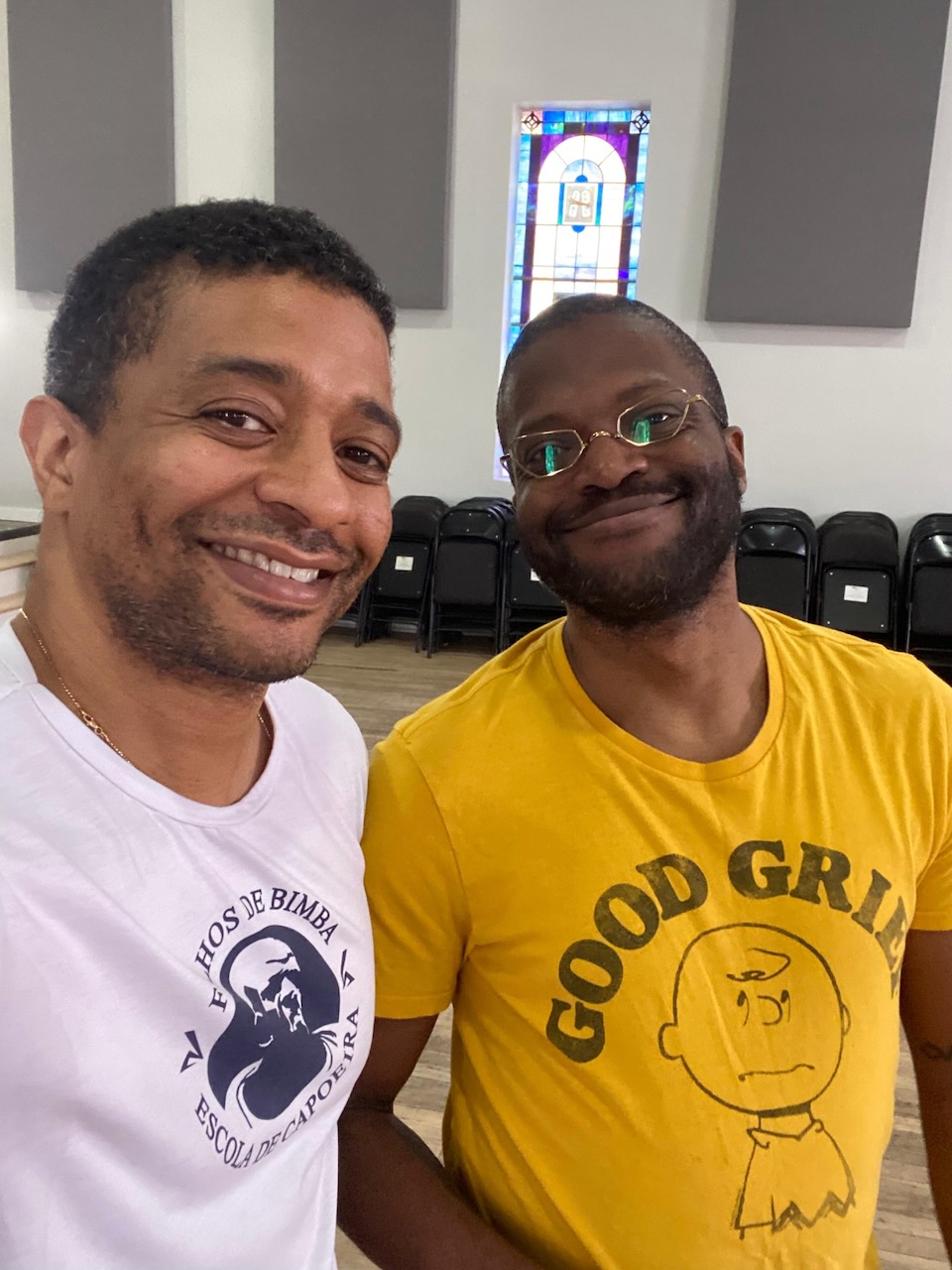
I got out of the class alive, but more importantly, I came out of the class alive. Know what I mean?
Capoeira is a communal thing. The more experienced teaches the less experienced. When playing a game in the roda, you are expected to not just throw kicks and flips, but to take care of your partner’s health as well. We sing together, some of us playing instruments and some just use clapping hands to keep the rhythm. We sing loud and we clap to support the berimbau player, and together we give the players music to follow and react against. You can train capoeira by yourself, but the full experience comes in a group.
It was a real pleasure to see Mestre Malandro had built another community of people who love capoeira. There were people in the class who had been training for a long time and relative newbies. The atmosphere was great.
There’s this thing in Black American culture, borrowed from West Africa. There is a symbol called a sankofa, and the meaning attached to it is that “it’s never too late to go back and get it.”
Newburn, the crime story by Jason Phillips and Chip Zdarsky, had a rotating backup story slot. Nick Dragotta and I did a story for it called “Go Back,” where a young and nameless man must navigate a city full of people who aren’t his friends in order to get back to his hometown and find out what’s wrong with his mom.
In Good Devils: Don’t Play Fair With Evil, we collected that story with two others and updated the title of the short story to “Go Back (and get it).”
Do you see the vision?
—
other writing, further reading:
Back in April, Steve Shelfdust published a little bit I wrote about Ginger’s Revenge by Victor Santos. I mentioned it back in newsletter #002. I wrote it, put it aside, and then circled back to it with fresh eyes a few months later. It’s not half bad. Really fun comic. I need to find something else to write about next.
I’m still posting to Letterboxd, but haven’t really sunk my teeth into anything lately. It’s fine. It beats not watching movies. That’s when I know I’m really in trouble.
—
some recent photos I liked:
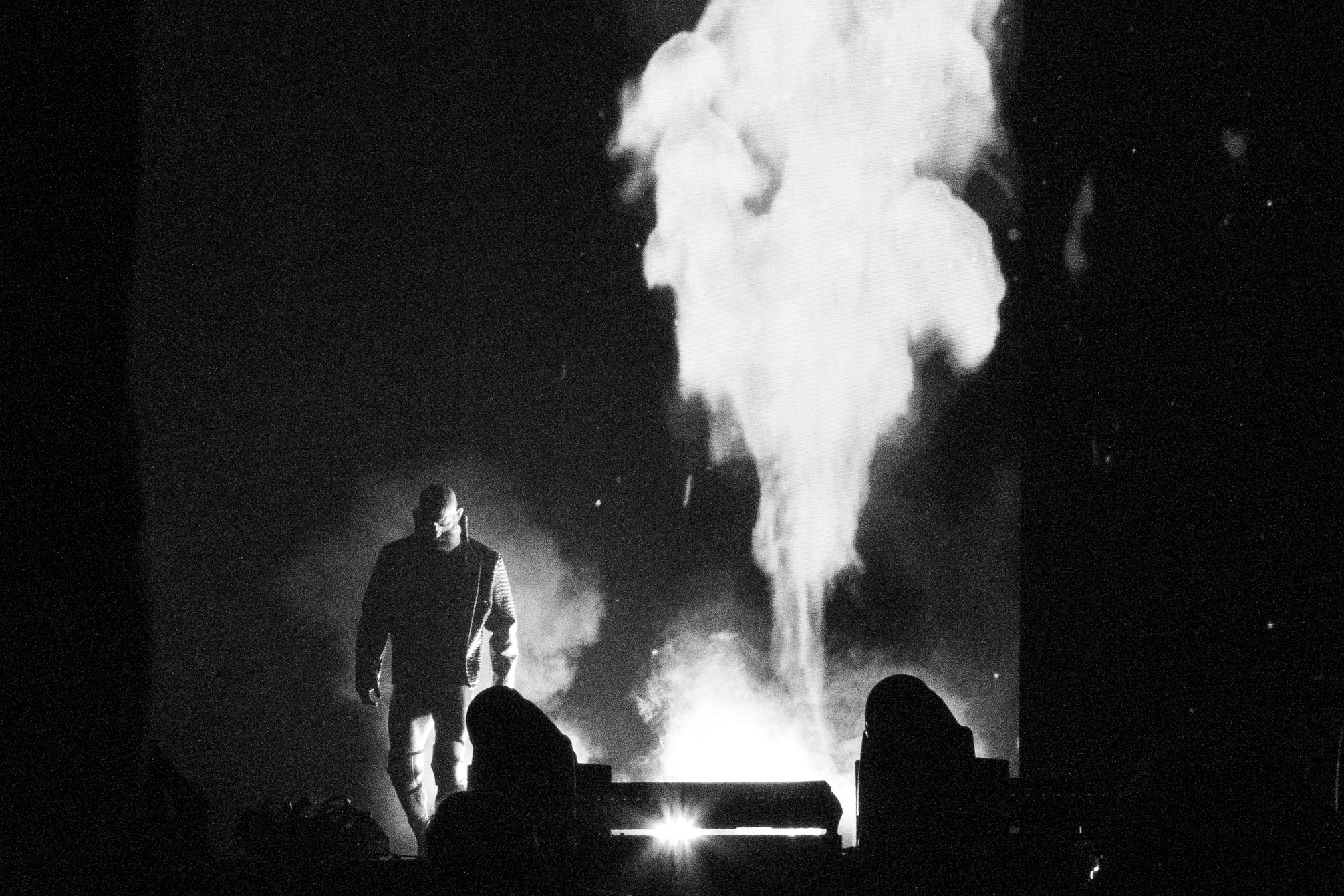
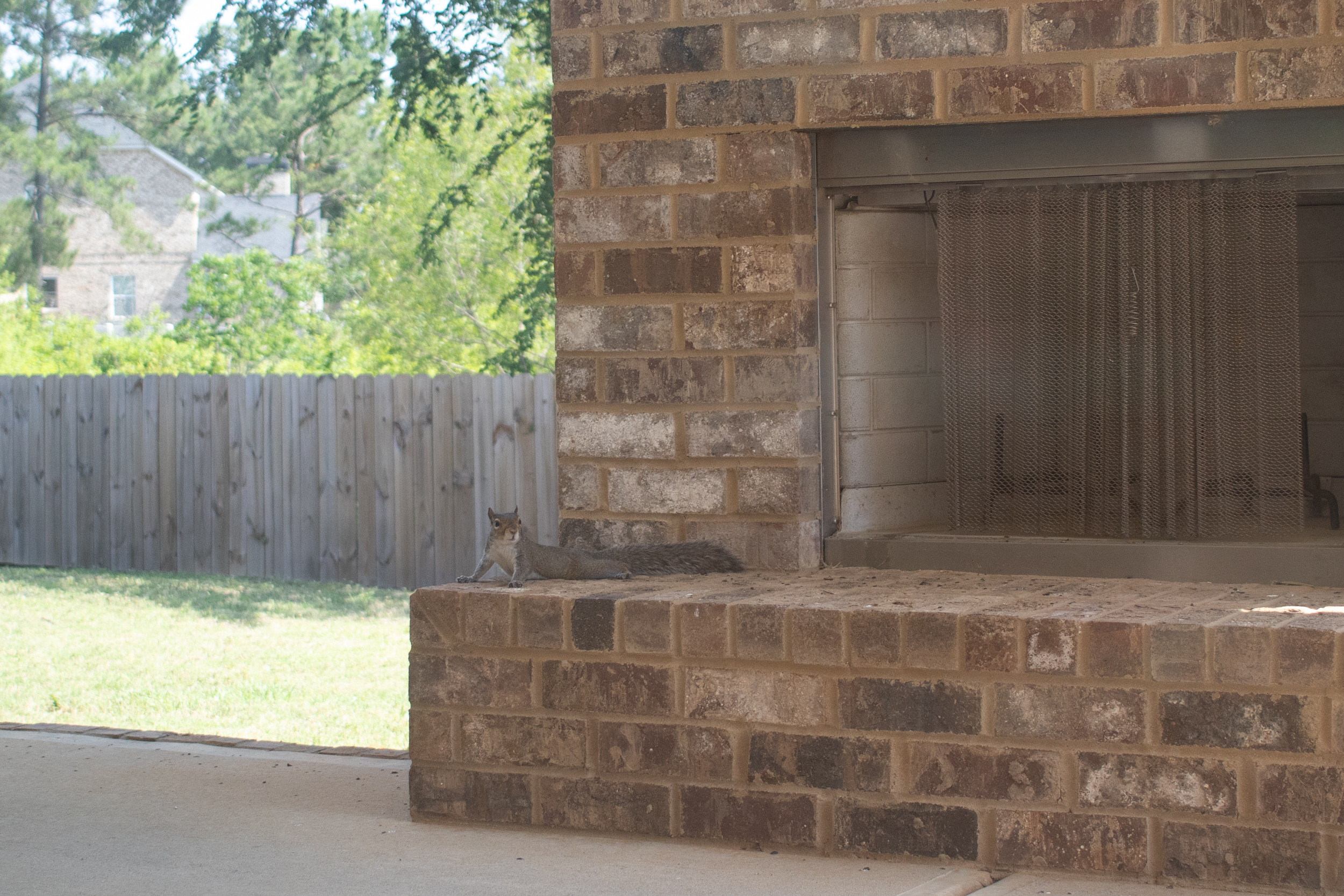
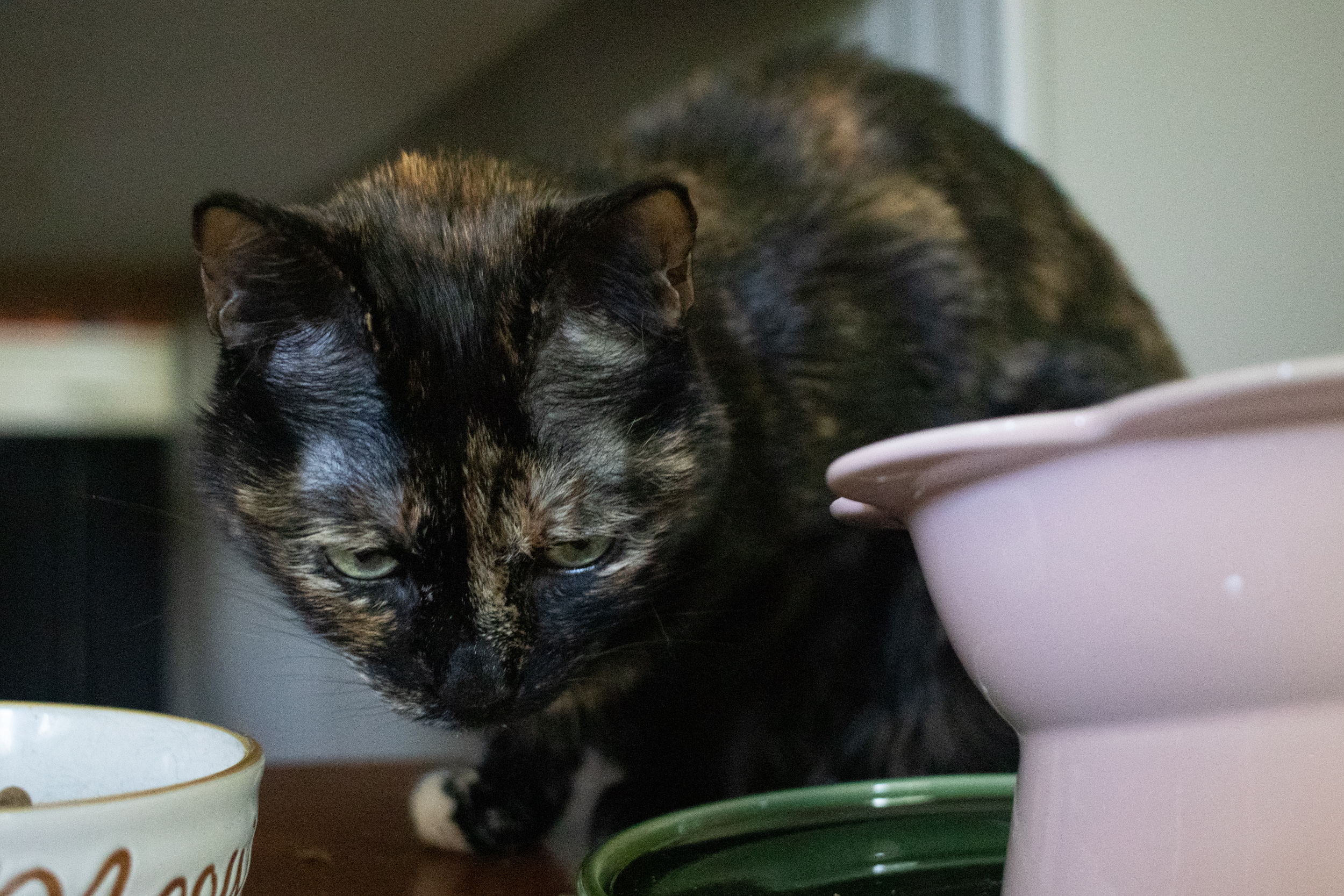
Carrying around a camera is a good vibe. Stay strapped.
—
That’s it.