I sort of trapped myself with the newsletter format. Where do normal essays go when I don’t want a full newsletter? What about titles? Should everything be a newsletter, instead of an essay? Then I realized: it doesn’t matter. It’s a difference without distinction. I’m making this up as I go and rules are fake. Sometimes a newsletter is about one thing, sometimes it’s about a lot of things. This one is about one thing. The next one, probably lots of things. The joy of everything/nothing. This is the seventh i am david brothers’s newsletter. Let’s talk about Marathon and the beautifully nasty feelings it gives me:
—
On Marathon: mors vincit omnia. sum quod eris. (about 2500 words)
In Bungie’s Marathon, released March 2026 (eight minute cinematic reveal, minute fifty gameplay overview), I am a runner, a digital consciousness that is, as near as I can tell, in a completely terminal amount of debt and thus forced into a life of constant exploitation.
A few universally sinister and incredibly stylish mega-corporations of the far-flung era of the game have tasked me with incarnating into a biosynthetic device called a shell to complete tasks for them. As a runner inhabiting a shell, I’m expected to investigate, explore, and scavenge what’s left of Tau Ceti IV, a deep-space colony that has gone dark after alien attacks and a few mysterious circumstances on top of that. Whenever my shell is destroyed or succeeds at its goal, I return to orbit to wait for the next mission.
Being a runner is corporate contract work in a setting where my humanity is a stumbling block, not an asset. The UESC government has sent security robots to manage Tau Ceti IV. My corporate overlords disagree, and have authorized me to destroy the bots as required by my missions. They invested in the colony project, and so feel a great measure of ownership over whatever remains.
In addition to battling the government, these mega-corps require me to cede bits and pieces of my self to get access to their missions, inventory, and upgrades. Some require a partition in my brain, while others want me to kill a rival runner before they can exfil and complete their own mission. I can work for them or their rivals, but in the grand scheme of things, everything I do benefits a mega-corp, and nothing I do is free.
In Marathon, I am a runner and I am expendable, just like my two teammates and our infinite rivals and enemies.
—-
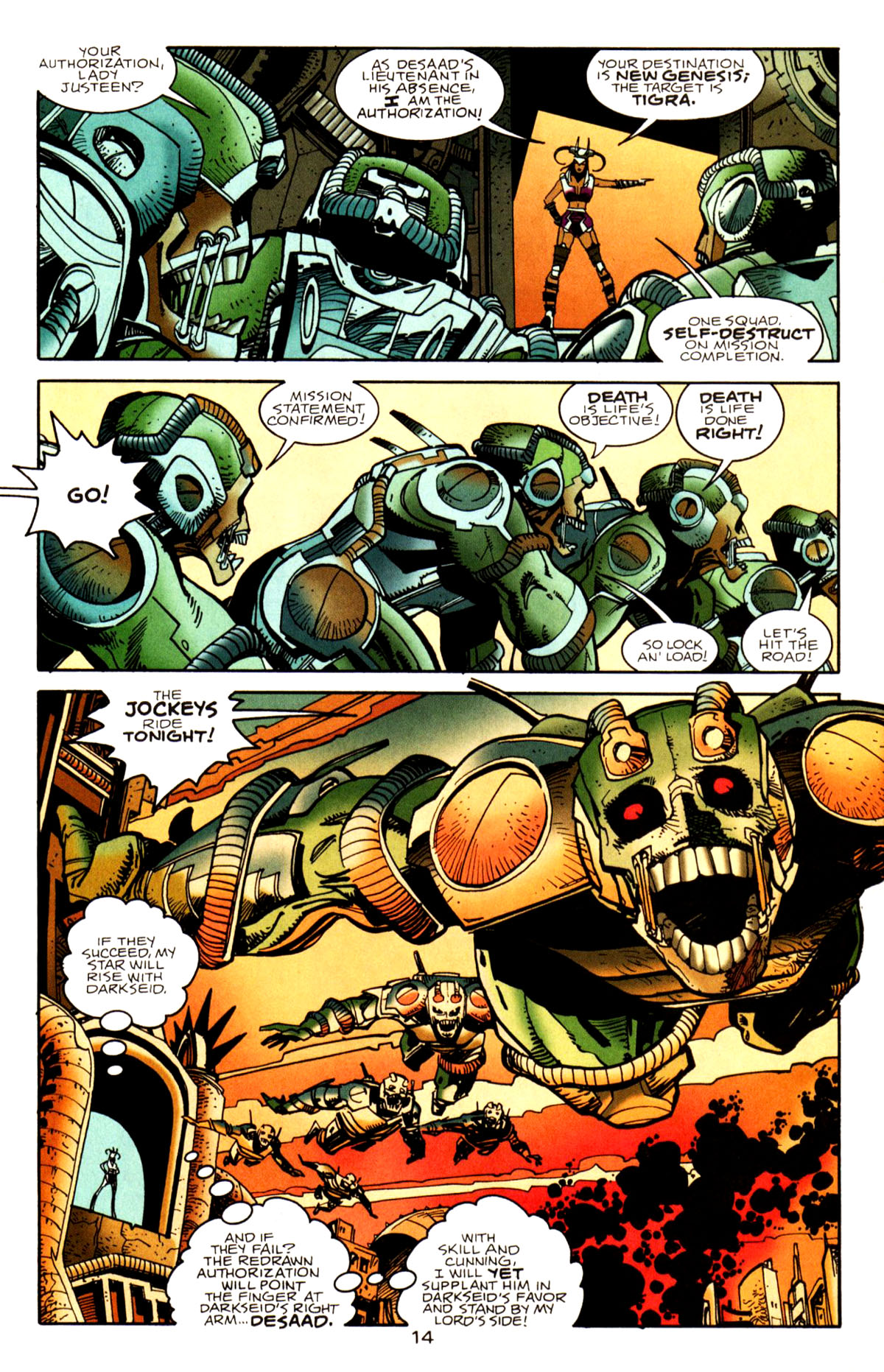 Walter Simonson, Orion
—
This kind of human-hostile setting is one that really appeals to me. Citizen Sleeper provided a very definitive experience in this realm, maybe the best ever. Nier: Automata digs into similar themes, and Armored Core 6: Fires of Rubicon is a titan of the sub-genre. (I did a video essay here, and a music video here.) Like Marathon, Armored Core 6 gave me a chance to inhabit a blank slate of a player character, rather than a more concrete one like 2B of Nier: Automata. There’s less of a filter between player and character in games like this. I can insert my self into the story and explore my own decision-making in the scenarios created by the development team.
With 2B, I’m inhabiting a character, right? “What would (my version of) 2B do here?” I’m role-playing as 2B, in the same sense that I am role-playing as Mario Mario of the world-famous Mario Brothers when playing New Super Mario Bros. In AC6 or Marathon, the choices the characters make are almost entirely my own. That little bit of possession goes a long way. It lets me make the story mine, for lack of a better phrase. I buy in a bit more deeply than I do when I’m playing as someone else.
—
The loop of Marathon encourages me to use my items, whether I came in with them or found them in the field. Am I gonna hang onto that thing and risk my life to make a hundred bucks, or am I going to full send and do what I need to do to get out alive, to secure an opportunity at further success? There’s no point to hoarding megalixirs for a later battle, or saving a certain weapon for a big fight. There is only the fight in front of me and the challenge it presents.
The items are meant to be used like money is meant to be spent. If someone has water, they should drink it. If I’m not willing to use what I have, I’m setting my self up for a rough time.
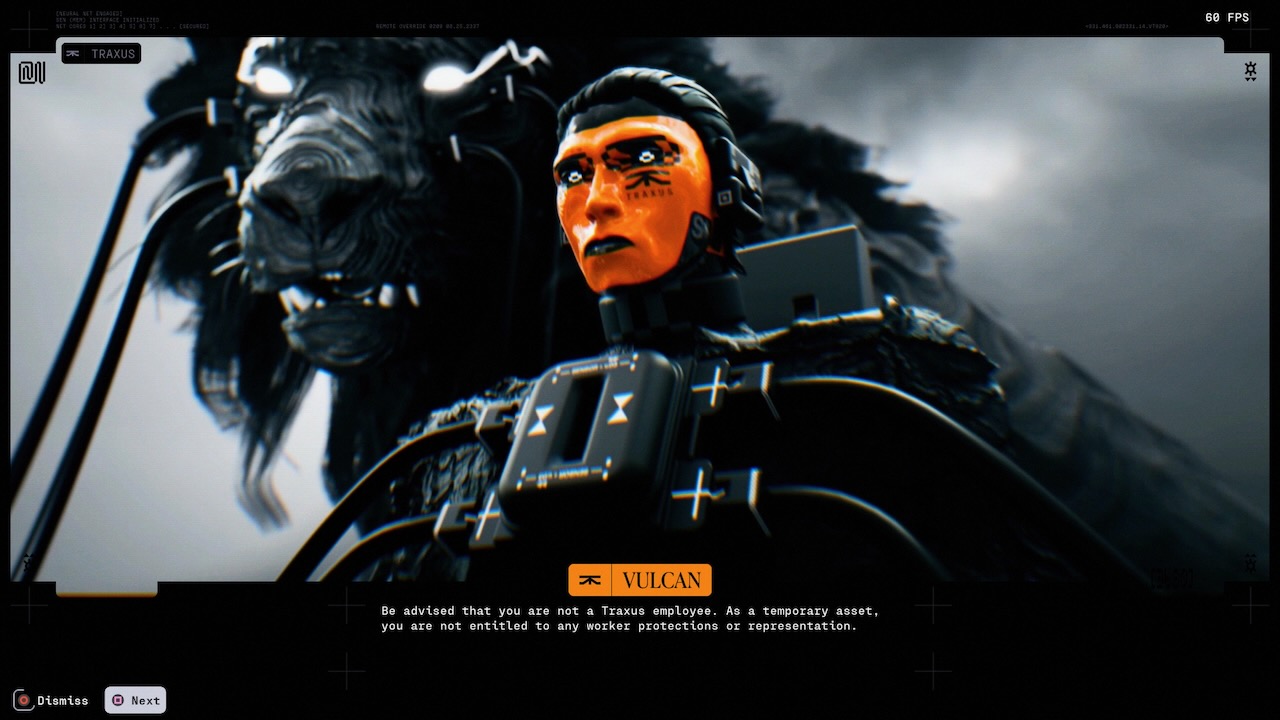
At the end of it all, nothing I gather is mine. The design of the game encourages me to use items rather than hoarding them like megalixirs in a Final Fantasy game. There is no “What if I need this later?” There is only “How will this help me convince this company to chip me a couple bucks to get this upgrade I need to finish this contract for someone else?”
Is that a win?
—
I used to write video game guides for a living, and it taught me a lot about being good at games. Quitting that job taught me to embrace being bad. Nothing happens if I die in a video game. Mistimed jump, wrong turn, mistaken input. Whatever. I may waste time or an item, but what’s really lost? I’m playing a game that I find fun and I’m getting closer and closer to my goal. There are moments when replaying a segment can be frustrating, but as a general rule, I play games that are fun whether I’m winning or losing.
I don’t mind dying. In fact, there are times when dying is strategy. When I can’t hack a boss in Sekiro: Shadows Die Twice or Elden Ring, I’ll take some time to learn their patterns and how to counter their techniques. This too, going from overwhelmed to being untouchable, is fun. I’ll spend my lives until I get the result I want. There’s no downside at all, outside of some possible frustration when things truly aren’t going my way and I can’t figure out why.
Losing, whether I’m killed by a runner or simply fail to exfil, is part of the game. So, I accept it and move past it. When my runner falls, I check my gear, pulling more things out of my vault, and jam the re-queue button. When my runner falls, I want another go, another trio, another chance at the slot machine. Each shell has specialized abilities, and sometimes I swap around if I’m not finding any joy with the one I chose first. There are six core shells and a special solo-only one.
The different shells are tools for me to use, and one way or another, I’m getting home with some loot, and it doesn’t really matter what it costs me. Dying in a video game isn’t intimidating enough to stop me from going back into the field. Dying in video games hasn’t been a real problem since arcades died. If I die on a mission, I hydrate, spin up another shell, and get back at it. It costs me nothing but time. None of this matters, not really.
—
The first cuss words and violence comic I ever read made a big impression on me. Frank Miller’s Sin City: The Big Fat Kill #5. It exploded my idea of comics, and in large part because of the inclusion of Miller’s keynote speech to Diamond Comic Distributors from a retailer summit in ’94. I was eleven. Miller talked about credit and art, Jack Kirby and work-made-for-hire. He loaded up a cannon and took a shot at Marvel over their treatment of a wide variety of creators. I only barely knew what the different roles in comics required at that age, and here I was, being introduced to an idea I wouldn’t understand for ages: independence.
Four or five years later, a friend introduces me to underground hip-hop and the website Underground Hip-Hop. I heard Company Flow, a trio composed of DJ Mr Len, Bigg Jus, and El Producto (currently one-half of Run the Jewels), and they instantly became a favorite. The CD case for Funcrusher Plus said they were “independent as fuck,” and the instrumental album Little Johnny from the Hospitul flipped it to “independent as fox.” I scrawled both of these on my brain as a teen, mostly because they sounded cool.
A dozen years after that, I’m working at Image Comics, which was founded specifically because of how Marvel and the comics industry at large was treating its artists. I was there when creators were putting out books that were creating huge fan bases. The Image Revolution really seemed like a turning point.
A dozen years after that, and things have somehow suddenly gotten much worse from where I sit on the comics industry side of things, but being truly independent is more feasible than ever before. I’ve had a website of my own since 2005, first 4thletter! and now this unnamed thing you’re reading here. After over thirty years of following these breadcrumbs, there’s clearly something about independence that became very important to me.
I’ve been working since I was 14 years old, and the exploitation threaded throughout Marathon speaks to me. I’ve had jobs I appreciated and jobs I came to loathe, and I find a lot to relate to when it comes to how the runners are abused by the mega-corps. It’s an easy entry into the game, the most obvious metaphor in the world, but still a good one, a satisfying bit of texture.
I inherited my work ethic from my grandfather. A job isn’t over til it’s done, and you gotta do whatever it takes to get the job done. This is great for finishing projects around the house but makes me so vulnerable to overwork at someone else’s request that I now draw a hard line between church and state, to the point where I’ll rarely, if ever, talk about the job when I’m not on the job.
I’m confident that every job I’ve ever had and will ever have would work me into the hospital, as long as the projects were done on time.
—
My experience in Marathon isn’t unique, nor is the resonance I feel radiating from it. I can see elements of it in how other players relate to their own runner and rival runners. The runners, and through them the players, are incredibly easy to identify with. This adds islands of ambivalence to the aggression that permeates the game. Rival runners are in my way, but if we’re both being exploited…then what?
(Youtube embed: “They Don’t See You As A Person”)
In the youtube video “They Don’t See You As A Person”, peterspittech explored the isolation and alienation that Marathon inspires. He says, “I killed this guy and…I don’t even really know why I did it” at the top of the video, and then goes into a tight spiral about what it means to kill people trying to survive, just like him, in a world where our jobs take advantage of us and underrate our worth. Why are you fighting each other, when the real exploitation comes from above?
(Youtube embed: “Is that knife in your hand for me?”)
Similarly, Austin Walker released “Is that knife in your hand for me?”, a video that explores one tense and mildly puzzling interaction with one other player by way of in-game proximity chat. It made me think, why are we fighting each other? One big reason is that all skinfolk ain’t kinfolk. You never know who you can really trust. Suspicion permeates Walker’s video, even as he’s trying to negotiate a truce for mutual benefit.
—
It worked out for Walker, but his video still makes me ask why should I trust these people I run into? Trusting people to keep their word is hard enough without adding competing interests and untrustworthy employers into the mix. Instead of trusting them, I can be sure, be safe, and shoot them down before they shoot me in order to take what they have for myself. That is something I can trust. Reality.
Alongside all that stuff about independence, I spent my childhood listening to Scarface, and he has advice for situations like this:
“I got a brick from a sucker that he wanted to move, but the whole while I’m cooking, I’m like, ‘Fuck this dude.’ It’s on, thirty-six zones of my own. Keep the money for myself, and take the work back home.”
Marathon, even with all the opportunity and personality, is a cold world, and I don’t know if my heart is warm enough to melt it. If I really want and need to get something done, isn’t taking someone out part of the game? I am loyal to my self, first and foremost.
—
A troubling train of thought, then:
I identify with the runners. But I am not a runner.
I am a gamer. I control my runner. I send him into battle, I give him a voice, and I decide where he goes and who he kills. When I fail, my runner dies and I send him back into battle. When I succeed, my runner lives, and I still send him back into battle. I want to know what happened to Tau Ceti IV, I want to know what’s going on inside Marathon, and I definitely want to catch someone slipping before they can catch me. Just as my runner spends items and ammunition to get my job done, I’m spending my runner’s lives.
Dying in Marathon doesn’t bother me like it does some people because I brainwashed my self into believing that dying isn’t failure. I talk about the importance of reps frequently enough that it probably annoys my friends, and spending a runner’s shell over and over just to get three unstable diodes so I can have a slightly bigger vault so I can hold a couple more items is an easy trade. I’m not even losing time, because Marathon feels great to play.
I identify with the runners, but the truth is, I’m just another mega-corp. I’m CyberAcme, who controls the runner and provides the tutorial. I’m NuCal, sending my runner into the field to bring back plants I can presumably turn into medicine to sell. I’m MIDA, pushing my runner to wreak havoc on Tau Ceti IV and to disrespect any UESC materiel they come across.
I am Arachne. My runner gives you the gift of silence.
—
The narrative of Marathon and its gameplay loop emphasize and represent the exploitation your runner experiences. My runner experiences a life of total corporate control and un-personhood. There is no peace beyond the quiet valleys between life-threatening runs, and no achievement beyond what my runner can accomplish for their mega-corps. Items and equipment are subject to churn, functionally temporary. Things pass through my hands and into the hands of other runners, if not my own masters.
The experience of playing Marathon—the act of sitting on my couch and pressing buttons, rather than the act of lurking around Tau Ceti IV and looking for randos to shoot—adds another layer onto the narrative. What I do is effectively identical to what the mega-corps are asking my runner to do.
I got Marathon thanks to a spare gift card and twenty bucks. With that twenty bucks, I get to send my runner on trip after trip after trip. My runner’s life is cheap to me as it must be to the mega-corps, considering the method and number of shells deployed on Tau Ceti IV.
For all I may identify with my runner, I’m still not giving him a break. I’ve tethered him to every corporation I could find in order to maximize my returns. I send him to work with good guns and lousy ones, and I frequently cause his death thanks to a combination of blood lust and overconfidence. (“Oh, there’s more people in here than I thought.”)
Thinking about this has introduced a more-than-welcome nasty flavor to the game. My runner is much more alone than I ever realized, back when I thought we were both falling into the clutches of Marathon‘s mega-corps.
—
Anyway.
It’s almost time for a new season of Apex Legends and a new music video/highlight reel. I need more video editing reps, because I have one project that’s currently kicking my butt in that realm. But I also don’t want to make this into something that’s strictly work, so I make AMVs as the spirit moves. It’s not quite the same as criticism in my head, but it’s definitely a similar muscle. “How do I get across what I like about this game in concert with this song?”
Here’s “Date With the Night” by the Yeah Yeah Yeahs, and a lil low-level highlight reel featuring Marathon.
(Youtube embed: Date With A Knife: A Marathon AMV (Yeah Yeah Yeahs, “Date With The Night”)
—
Help somebody, if you can. Here in Oakland, we’ve got groups like the Urban Compassion Project, which is working to fight illegal dumping locally, in addition to provided support to our unhoused neighbors. The UCP has done a great amount of work cleaning things up and trying to bring attention to the effect illegal dumping has on the town and the people who live here. The city and state haven’t been helping like you’d expect. This is another way we-the-people fill in the gaps. Maybe there’s something similar near you, or maybe it’s worth taking a sharp stick on a walk with a small bag and gathering some litter on your block.
—
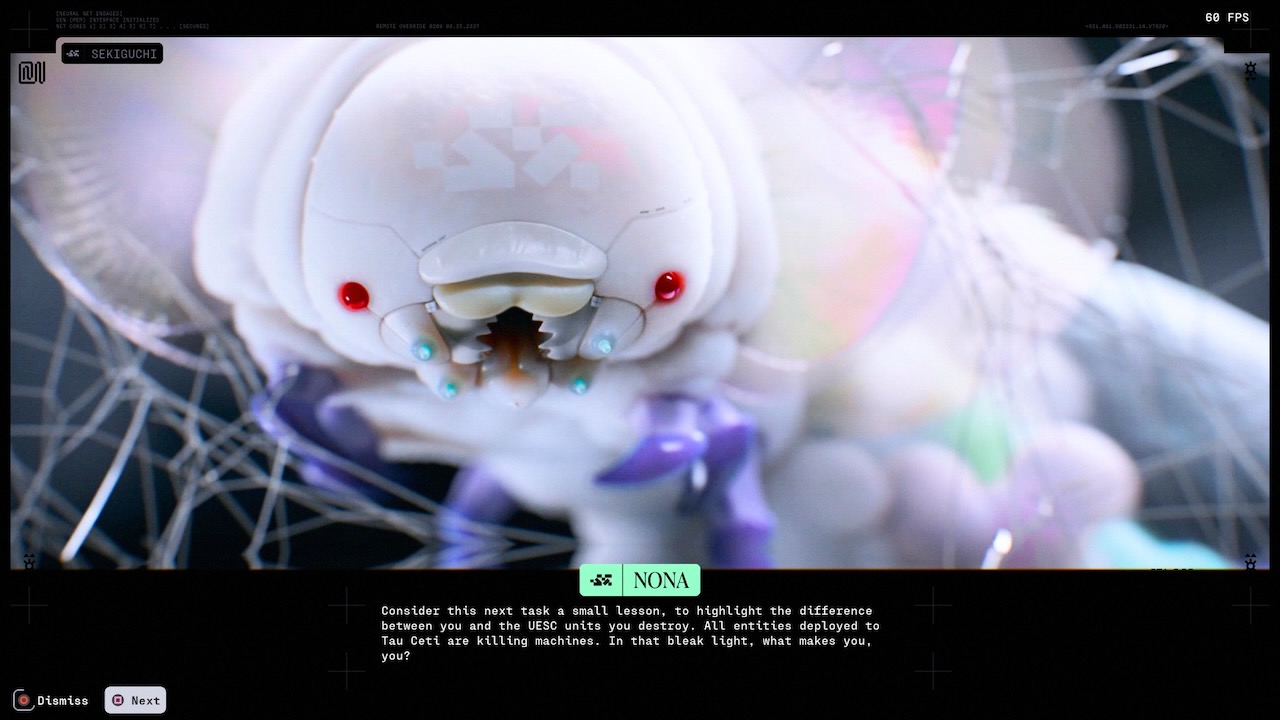
What makes you, you, tourist?
—
That’s it.
Lovely essay on a game I’m fascinated by and terrible at.